Introduction to Production Line Integration
Optimizing camera calibration and characterization on a production line is often a challenge for camera manufacturers, as integrating traditional light sources (e.g., fluorescent or simple LEDs) can lead to instability and poor repeatability. Another challenge in production line calibration is how to generate a variety of lighting scenarios that the camera may encounter in the real world.
A proper test protocol will use a variety of testing scenarios and light spectra to ensure all aspects are characterized before the device reaches the consumer. Without the ability to test multiple scenarios, a device under test risks receiving a “pass” when, in reality, it has only met production-line standards, not necessarily real-world standards.
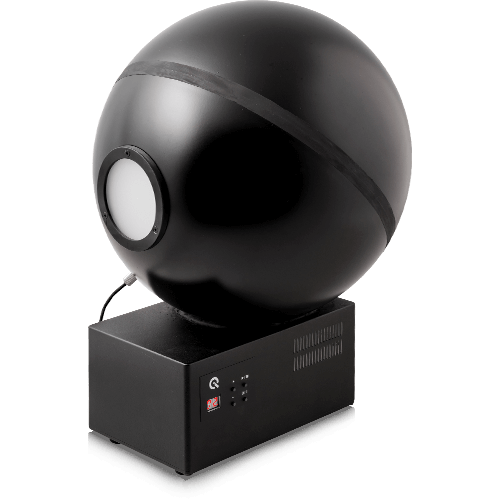
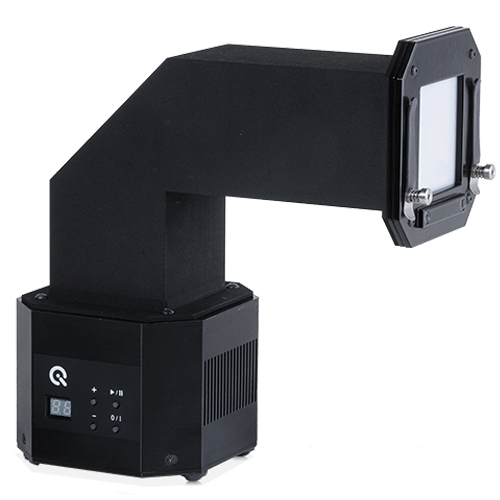
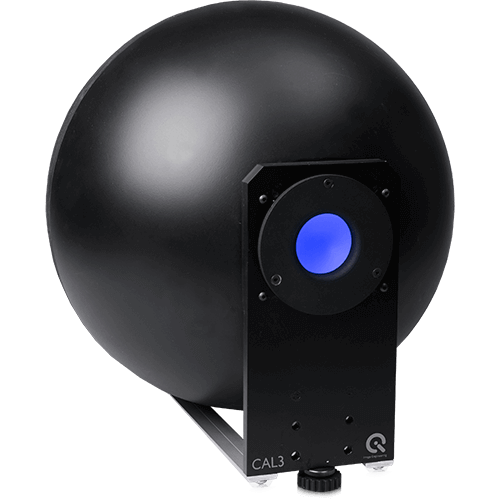
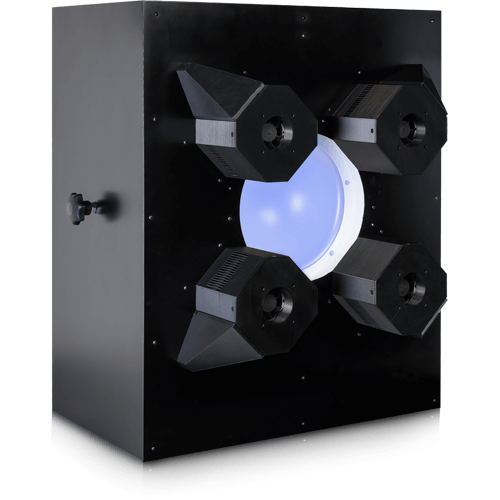
With these problems in mind, our R&D department set out to develop the unique iQ-LED technology, with the intent to make it available for production lines in the form of integrating spheres. These integrating spheres combine iQ-LED technology to create a series of “CAL” devices that are easy to implement into a production line.
An overview of iQ-LED technology
iQ-LED technology can generate custom spectra in a controlled lab environment. The ability to replicate other light sources makes this technology a powerful tool for manufacturers that need to test their cameras under various lighting conditions. This ability is particularly relevant for production lines, as you only need to implement one light source into the workflow.
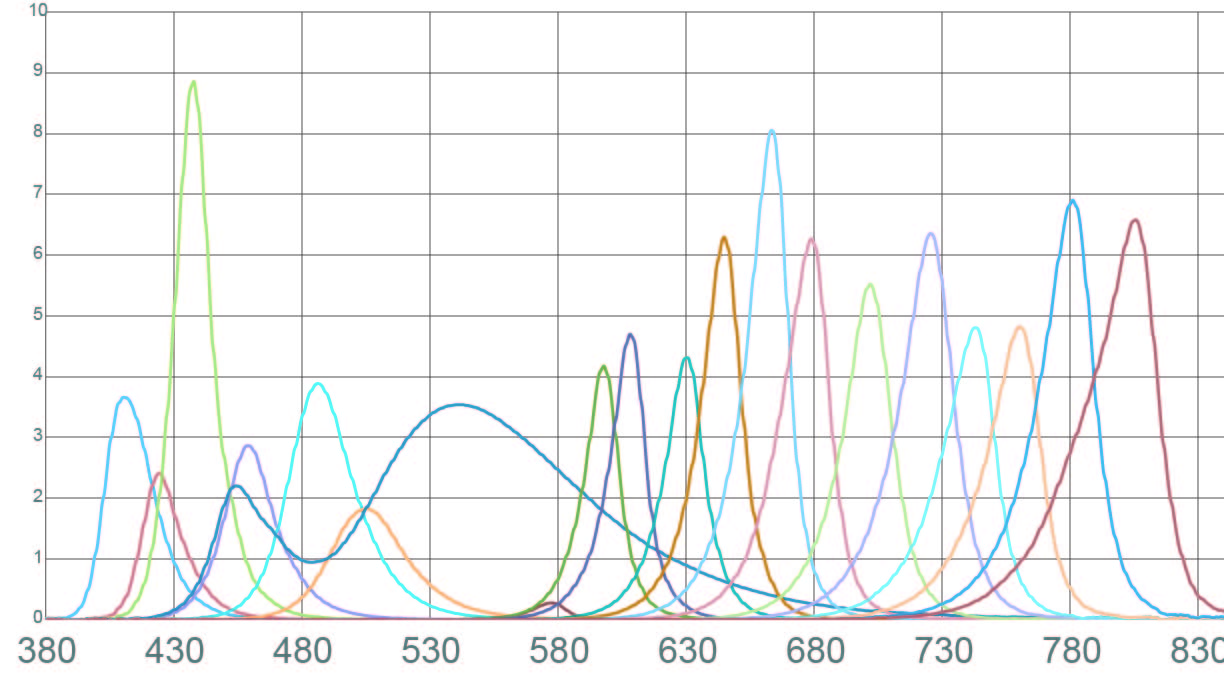
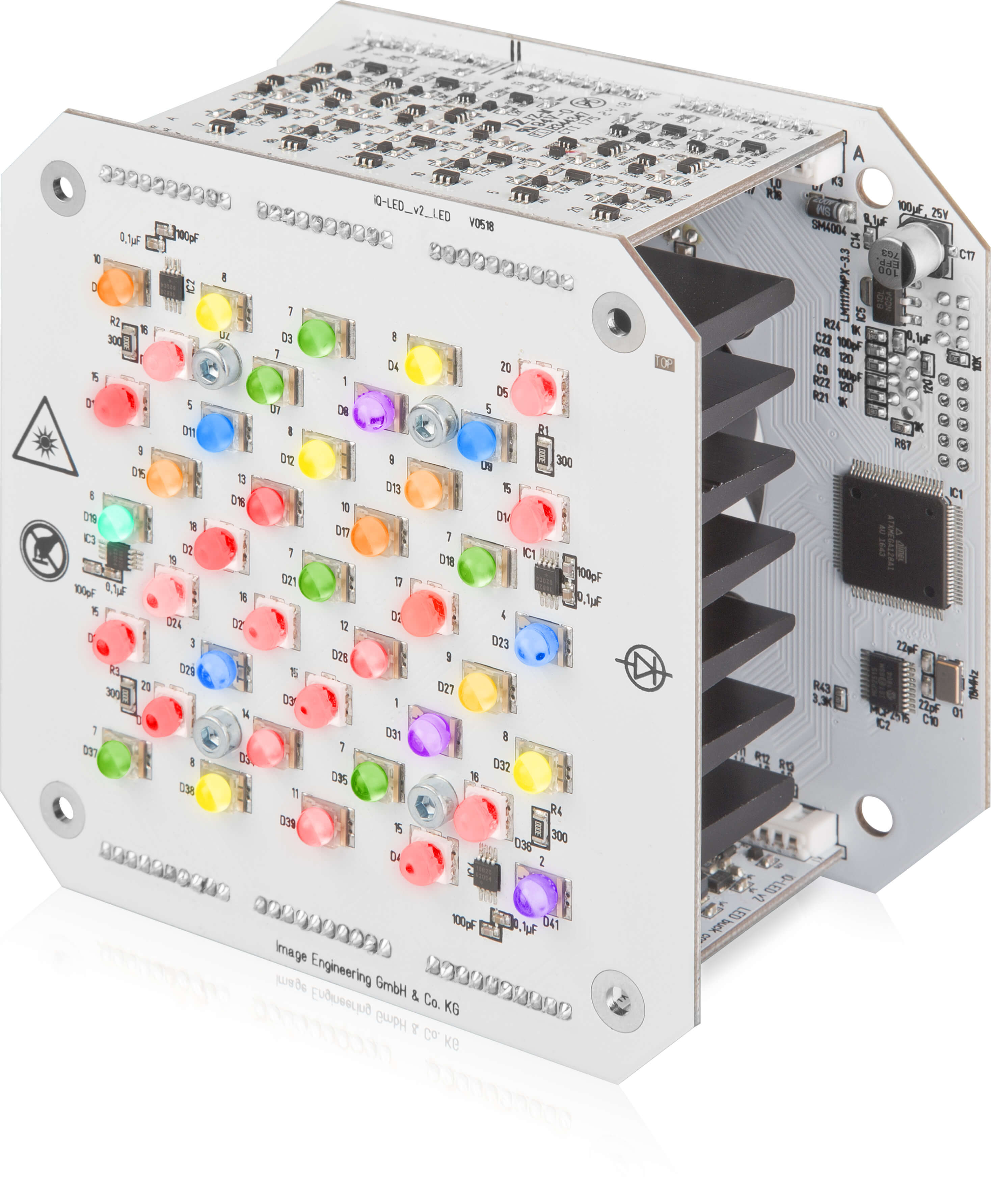
iQ-LED technology can generate custom spectra by combining the emitted radiation from spectrally distinct LEDs. We harness the technology through the use of standard modules that each consist of 20 different channels generated from 41 high-power SMD LEDs on a 10 x 10 cm board.
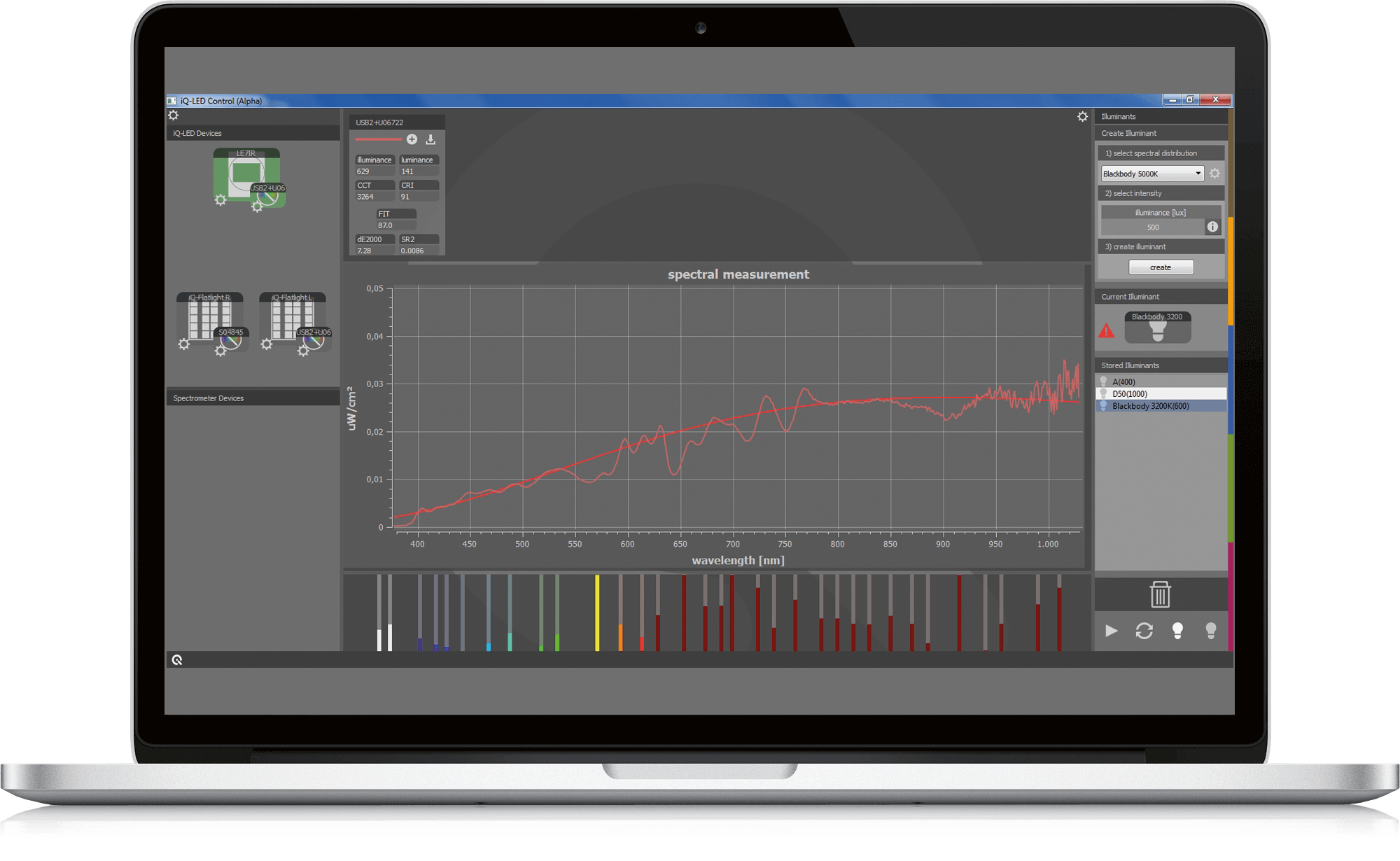
iQ-LED technology uses a NIST-traceable, calibrated spectrometer and iQ-LED control software to calibrate and correctly generate spectra. Once correctly calibrated, the illuminant can be stored on the device and used without a PC. Up to 44 illuminants and one sequence can be stored on the device.
Please see the article here for detailed information on iQ-LED technology.
Combining iQ-LED with integrating spheres
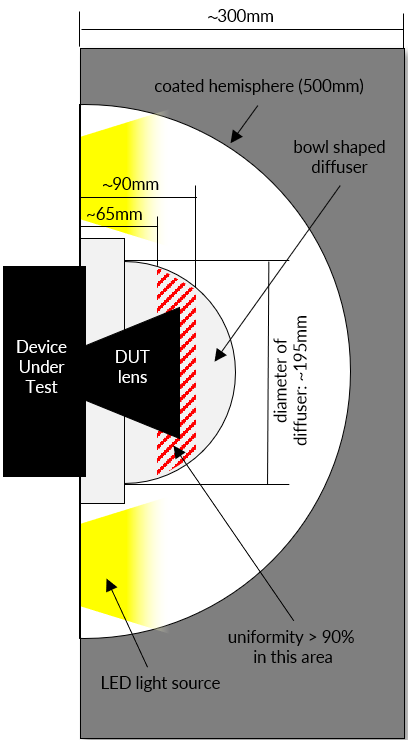
The light emitted by the high-power LEDs per element needs to be mixed before it reaches the DUT. Using integrating spheres in combination with specially selected diffusers has proved to be an ideal option to achieve optimal mixing. These spheres are uniquely designed using a non-reflecting special diffuser filter to ensure even light distribution on the measuring plane. Multiple iQ-LED modules can operate within a single light source, all of which are controlled via the UI software or API.
A full camera calibration can then be completed in a matter of seconds, thanks to the LEDs' short response time, provided the image processing and camera transfer are fast enough. The combination of these features makes CAL technology ideal for production line integration.
Production line integration
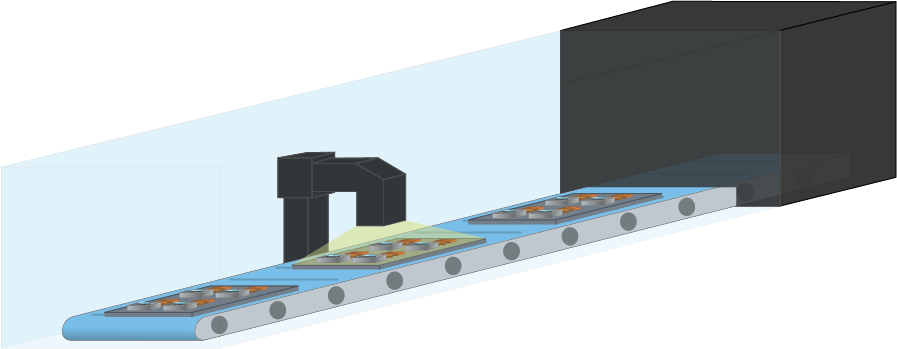
We offer a range of CAL devices in various shapes and sizes to meet the requirements of different production lines. We equip the devices with advanced production-line features, including temperature sensors, self-testing at startup, and an operational-hour counter, for smoother integration. Depending on the setup, it’s possible to calibrate multiple camera modules simultaneously using the CAL devices.
Each device uses a NIST-traceable, calibrated spectrometer and iQ-LED control software to calibrate and correctly generate spectra. Once correctly calibrated, the illuminant can be stored on the device and used without a PC. Up to 44 illuminants and one sequence can be stored on the device, making the CAL devices even more practical for production line use.
Production line partnerships
To further strengthen our CAL technology on the production line, we often supply our CAL products to other production line suppliers looking to integrate the benefits of iQ-LED with their devices. Working with these suppliers enables us to offer additional advanced solutions for production-line camera calibration and characterization.
Want to learn more about production line image quality testing?
Contact us to set up a training session with our engineers.